by Rev. Dr. Martha Creek
There is a quiet misunderstanding in our culture that being positive somehow means ignoring reality. That if we “look on the bright side,” we must be denying the pain, the conflict, or the hardship right in front of us. But that is not truth. Being positive is not denial — it is direction. It is a conscious, spiritual choice about what we bring into the moment, knowing that what we bring contributes to what unfolds. This, however, is a FAR CRY from toxic positivity or spiritually bypassing emotions of real-life experiences and the full gamut of that.
In times like these, I sincerely believe this distinction matters deeply.
You may find yourself in what feels like a boogery situation. Challenged, Hurting, Worried. Discouraged. Perhaps the headlines feel relentless, stirring uncertainty or even fear. Perhaps you are walking through something deeply personal — a family crisis, a health concern, or a season of overwhelm. These are not small things. They are real. They deserve acknowledgment and care.
And yet, within all of this, there remains a powerful question:
Who will I be in the midst of this?
“You may not control all the events that happen to you, but you can decide not to be reduced by them.” – Maya Angelou
Because who you are — your consciousness, your presence, your response — shapes the field around you.
We often cannot control circumstances, but we are never without influence. The energy we bring — whether reactive or reflective, fearful or grounded, contracted or open — contributes directly to outcomes. This is both a spiritual responsibility and a gift.
So how do we increase our capacity to respond, rather than react, especially when life feels difficult?
One powerful and surprisingly simple tool is writing. This may be a new idea or approach for many.
I am not referring to writing to publish. Not writing to impress. But writing to process, to understand, to expand our awareness. Writing as a spiritual and neurological practice.
A colleague introduced me to a specific form of this practice by the neuropsychologist Angelo Bolea, who emphasized the importance of integrating both the positive and the negative aspects of our experiences. His work reminds us that healing and resilience are not built by ignoring difficulty, but by meeting it honestly—while also expanding our awareness beyond it.
In Bolea’s work, including Brain Healing Writing: Writing Personal Experiences Heals Physical and Emotional Problems, he suggests a structured, intentional approach to writing that supports both emotional processing and brain health.
Here is the essence of the practice:
- You write daily, anywhere from one to thirty minutes.
- You write by hand if possible, engaging more areas of the brain and strengthening neural connections.
- And most importantly, you write with balance.
- You include the facts of what has happened — both the difficult and the supportive.
- You include your emotions — both the painful and the uplifting.
- And then, you intentionally include anything else positive that you can notice.
- This is not about forcing positivity. It is about expanding perception and perspective.
Our brains are naturally wired to scan for danger. It is a survival wiring. This negativity bias has helped humans survive for thousands of years. But in modern life, it can leave us overwhelmed, anxious, and disproportionately focused on what is wrong.
Without intentional practice, the negative can begin to dominate our inner world — even when there is also goodness present.
This is where writing becomes a sacred tool.
“The brain is like Velcro for negative experiences and Teflon for positive ones. Without intention, we slide past the good and cling to the hard.” – Rick Hanson
When you sit down and begin to write, you are creating space between you and your experience. You are stepping into the role of observer rather than being lost in reaction. You are allowing your thoughts and emotions to move, rather than remain stuck. It provides a possibility of having emotions and not collapsing under the weight of them.
And when you intentionally include both negative and positive elements, something powerful begins to happen.
- Perspective widens.
- Capacity increases.
- Resilience grows.
- Peace is foundational.
You may begin your writing by naming what is hard:
- “The conversation with a workmate, family/friend felt tense today.”
- “I am worried about what I’m seeing in the news.”
- “I feel overwhelmed by what’s happening in my family.”
This is honesty. This is necessary. This is grounding.
Then you continue:
- “But I also noticed someone offering kindness.”
- “I am grateful for the support I received today.”
- “There is still love present, even in the midst of this.”
Now something shifts.
You are no longer trapped in a single narrative. You are holding a fuller truth.
This is not denial. This is integration.
And integration is where strength lives.
Over time, this practice rewires not only your thinking, but your capacity to respond to life. You begin to see more clearly. You become less reactive and more intentional. You develop a steadiness that allows you to meet a challenge without being consumed by it.
- Imagine what could happen if individuals practiced this routinely in all situations.
- Imagine entering a meeting not just carrying frustration, but also an awareness of what is working, what is meaningful, what is still possible.
- Imagine families navigating difficulty while also naming gratitude, connection, and small moments of grace.
- Imagine a world where we remain honest about challenges—but refuse to lose sight of goodness.
This is not naïve. It is transformative.
And it begins with something as simple — and as profound — as a pen and a page.
A Practice to Begin Today:
- Set aside one to thirty minutes each day.
- Write by hand if possible.
- Write the facts of your current experience — both negative and positive.
- Write your emotions — both negative and positive.
- Add anything else positive that you notice, no matter how small.
Let this be a space of honesty and expansion.
Let it be a place where your soul can speak freely.
Let it be a daily returning to balance.
Because the truth is, wonderful things are still happening all around us — every single day. Acts of kindness. Moments of beauty. Glimmers of hope. These are not insignificant. They are essential.
“You are the sky. Everything else — it’s just the weather.” — Pema Chödrön
It is a spiritual practice to see them.
It is a spiritual practice to give thanks for them.
And according to Dr. Bolea’s work, it is also one of the most practical ways to strengthen your brain, your resilience, and your ability to face life with courage.
So no, being positive is not denial.
It is participation.
It is choosing to bring awareness, intention, and openness into every situation, even the most difficult ones.
And in doing so, you do not just change your experience — you become part of the healing of the world.
One page — and in my case, one carefully bent knee — at a time.
All my love and Happy Spring, Blessed Easter and renewal time.
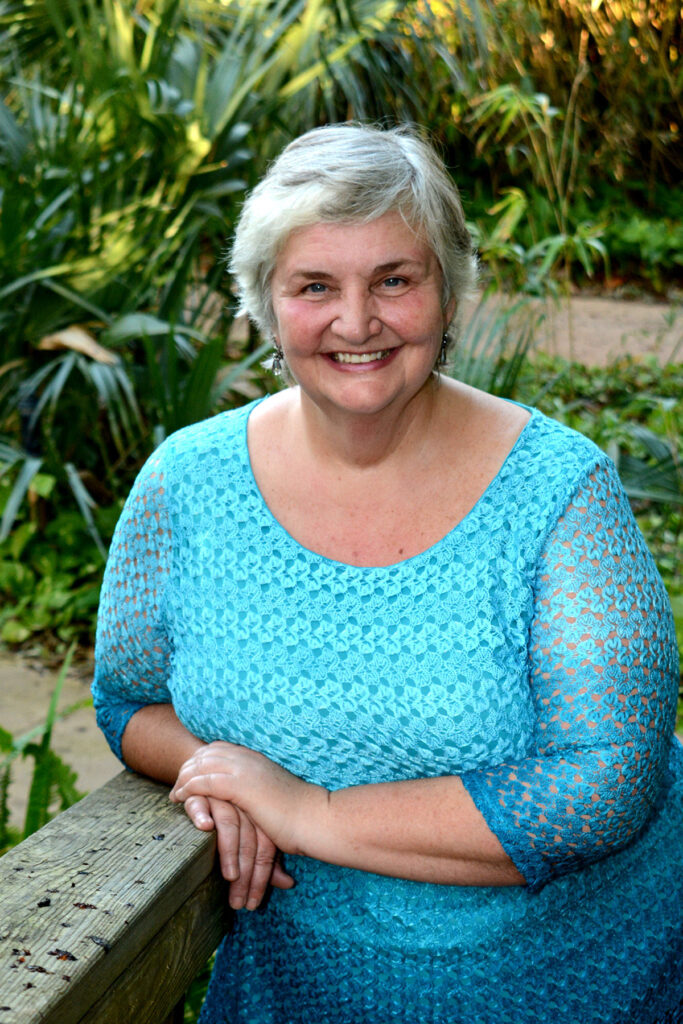
Rev. Dr. Martha Creek
Widely known in New Thought, Martha’s trainings approach deep inner work as an adventure with a sense of curiosity and wonder. A master of the art of right questioning, she calls forth the most stubborn and self-defeating patterns to create a new way of being, literally.
Ordained in Religious Science and Divine Science, Martha has served as Great Lakes Unity Consultant, served several years in the Unity Worldwide Institute faculty, and serves in ANTN leadership. She has attended Emerson Theological Seminary (Masters and Doctorate), Byron Katie School for The Work and Hoffman Institute. She is a Healthy Congregations Facilitator and Trainer.
See more at https://www.marthacreek.com/.
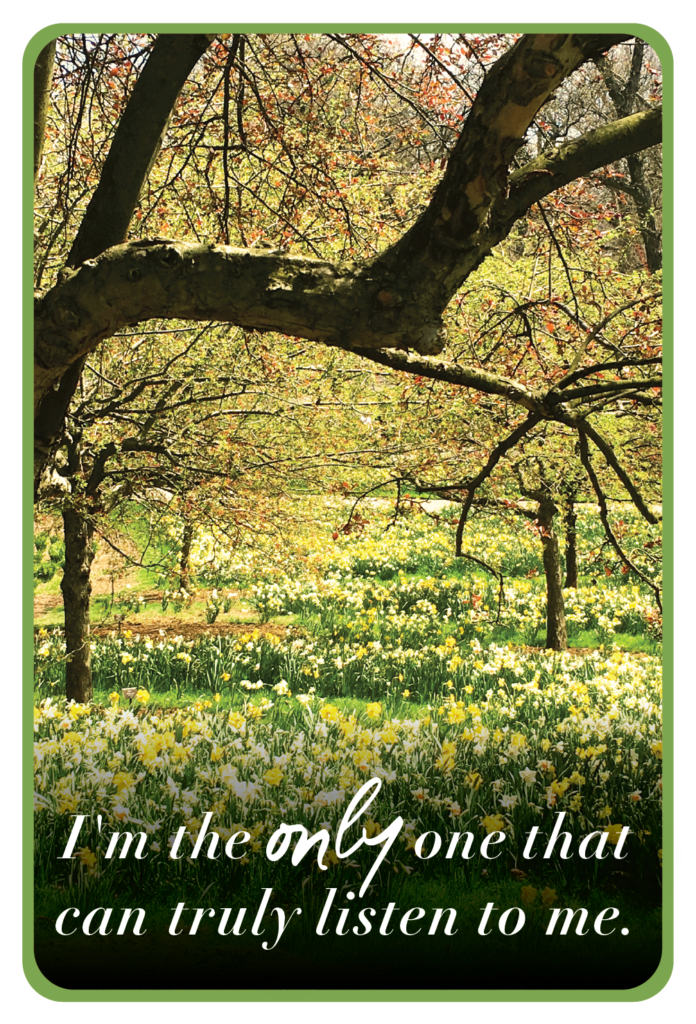
Martha Creek’s Divine Guidance Cards are a sacred tool designed to awaken insight, deepen spiritual connection, and guide individuals toward inner clarity. Each card features a divinely inspired photograph taken by Martha, capturing the profound beauty, stillness, and wisdom of the world around us.
Through these 52 divinely inspired images, infused with energy and intention, users are invited to pause, reflect, and receive the messages that their soul is ready to hear. The deck serves as both a mirror to the inner self and a bridge to the Divine, offering guidance, healing, and transformation in every draw.